Seven and a half million molecules carry a signal almost nobody can extract.
We built the estimator that extracts it — without a single binding label.
← → to navigate
01 — What a DEL isSplit-and-pool synthesis
Every molecule carries its own barcode, so a billion of them can be screened in one tube.
Three cycles of chemistry with a few hundred building blocks each produce
hundreds of millions to billions of compounds. The DNA tag grows with the
molecule, so after the whole pool is washed over an immobilised protein, sequencing the
surviving barcodes says which molecules stuck. One experiment, a few days,
tens of micrograms of protein.
02 — Why it mattersDEL in the clinic
Almost every major pharmaceutical company now runs DEL. It has already produced clinical candidates.
GSK2982772RIP1 kinase inhibitorPhase II in psoriasis, rheumatoid arthritis and ulcerative colitis
GSK2256294soluble epoxide hydrolasefirst DEL-enabled clinical candidate; Phase II completed
X-165autotaxin inhibitorfrom a 225-million-member library; FDA-cleared for Phase I
The economics are the reason. Synthesising a conventional screening library can cost on the
order of a billion dollars; a DEL of comparable or far greater size needs
standard lab infrastructure and a sequencing run. More than 70 distinct DELs
have been published since 2004, and over half of all DEL-derived ligands reported to date
appeared in the last six years.
03 — What goes wrongWhy the counts lie
A read count is not an affinity. Six different things can raise it.
Matrix bindersThe molecule sticks to the beads or the affinity tag, not the protein.
Promiscuous bindersCompounds that enrich against every target ever screened.
TruncatesA cycle failed; the barcode claims a molecule that was never made.
Tag and yield biasUnequal starting copies and DNA-tag effects shift counts independently of binding.
Sampling noiseBelow about ten copies, counts are Poisson. Most of the library sits there.
False negativesThe DNA linker blocks real binders. A 2025 PARP study found several missed actives per hit.
The field's own remedy is blunt: Pfizer's replicate study found that simply discarding
compounds with one to five reads cut the dataset more than a hundredfold
without changing the conclusions. That is the standard practice our work is aimed at —
throwing away almost everything is the state of the art.
04 — Who built this fieldThirty years, three steps
The idea came from a Nobel laureate. The machine learning came from Google.
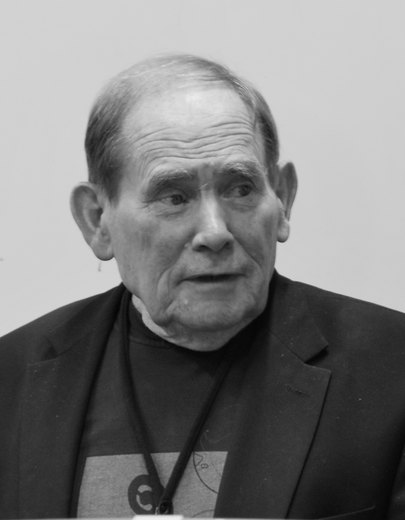
1992Sydney Brenner & Richard LernerScripps Research. Propose encoding each molecule in a combinatorial library with its own DNA tag. Brenner takes the 2002 Nobel in Physiology or Medicine for unrelated work on C. elegans.
2004–18Dario Neri & Jörg ScheuermannETH Zürich. Turn the concept into a working platform; more than seventy libraries published. In parallel X-Chem, GSK and Novartis industrialise it.
2020Patrick Riley & Steven KearnesGoogle Accelerated Science, with Eric Sigel and Matthew Clark at X-Chem. Train graph neural networks on DEL counts and screen catalogues the library never contained.
05 — The state of the artWhat the leading groups did
Google set the benchmark in 2020, and has been refining the loss function ever since.
~30%hit rate at 30 µMMcCloskey, Sigel, Kearnes, Riley et al., J Med Chem 2020 — ~2,000 compounds tested prospectively across sEH, ERα and c-KIT
IC50 < 10 nMfor every targetgraph convolutional network beat a fingerprint random forest; ZebiAI and the Chemome initiative spun out of it
2first ligands for WDR91Xu, Feng & Kearnes — automated hit expansion on a target with no known inhibitors
The line of work after 2020 is all about the noise model: a multilabel
architecture that stops a human choosing the classes (Xu, Han & Kearnes, NeurIPS 2021);
an uncertainty-aware Poisson likelihood over target and control counts (Lim & Coley);
negative-binomial regression (Ma et al.); partial-product models that account for incomplete
synthesis (2022); sparse recovery in deldenoiser (Kómár & Kalinić);
and docking-informed likelihoods in DEL-Dock (2022).
06 — The blockerqDOS30 · 1,727,652 molecules
Almost every molecule was seen exactly once.
1 read98.960%
20.640%
30.147%
4+0.236%
A single read is close to no information. Across all ten libraries the singleton share runs
97.4% to 99.9%. Every per-molecule number computed from this data is dominated
by the prior you impose on it — which is why the counts normally get thrown away.
07 — The ideaDon't threshold. Infer.
A cutoff is a guess. We let each library tell us where its own signal starts.
Every library's count histogram is fitted as two overlapping populations —
one that is pure sequencing noise, one that is real binding. Five candidate zero-truncated
families per library, chosen by BIC. What falls out is not a threshold but a probability.
count 1P = 0.002
2P = 0.136
3P = 0.931
4P = 0.999
P(signal | count) for qDOS30. The decision boundary lands at 3 — but it was
derived, not chosen, and it comes out at 4 in qDOS18_3. Ten libraries, ten separate fits.
08 — The pipelineCounts → labels → ranking
Six stages. No human ever labels a molecule.
16,104positives inferredfrom counts alone, across five libraries
99,752quarantinedcount ≥ 2 the noise model explains — kept with a reason, never silently dropped
0binding labels usedthe model never sees a known active
The fitted distribution assigns every molecule a label. A gradient-boosted tree then learns
to predict that label from chemical structure alone — so it can score molecules that were
never in the library at all. Counts teach the model; structure lets it travel.
09 — How it worksDEL-count model v2
Counts in, ranking out.
Two populations, one histogram
10 — Why it is believableLeak-proof by construction
The easiest way to fake a good number on DEL data is to let the model mark its own homework.
Molecules built from the same two building blocks are near-identical. Split them at random
across training and test and the model simply recognises what it has already seen —
and every reported score is inflated.
So the folds are grouped by disynthon pair: a deterministic hash of the
library and the (b1, b2) pair decides which fold a molecule belongs to. The guarantee is
absolute — no molecule is ever scored by a model that saw its own building-block pair.
All 7,465,100 labelled rows were scored this way.
common.py · fold_of(lib, b1, b2, K)
11 — The resultFull population, five libraries
It finds the signal.
0.940 – 0.984cross-fitted AUCevery molecule, no sampling
54× – 324×enrichment, top 0.1%qDOS23 lowest, qDOS18_3 highest
0.831physicochemistry alonethe honest floor — we measured how much is just library chemistry
Every design choice was settled by a 154-run bake-off on identical folds:
how to treat single-read molecules, which fingerprint, which learner. The configuration that
won programmatically was rejected — its features cannot be computed for a molecule
outside the library. We measured the price of that constraint: 0.003 AUC.
12 — Where we standActive Learning phase
Both of our entries placed in the top tenth of the field.
5 / 11012 series · 28 hitsEr-test_v1 · ROC-AUC 0.911
12 / 11010 series · 27 hitsTeam_StableFold_AL2 · ROC-AUC 0.847
59teams in the field110 scored submissions, active learning split
The challenge scores distinct series first, not raw hits — because a programme
needs several independent chemical starting points, not fifty variations of one. Our scored
entries came from the fingerprint selection model. The count model described here has
never been scored, and nothing on the following slides claims otherwise.
13 — The headroom178,052 molecules, two rankings
The two models barely agree. That is the asset, not the problem.
0.12Spearman correlation0.1155 – 0.1317 over 178,052 molecules
2shared in the top 10036× more than chance
1.2×agreement at top 50,000barely above chance — they rank different things
A fingerprint model trained on 39 known binders and a count model trained on zero binders
pick almost disjoint molecules — yet both concentrate their agreement exactly at the top.
Two independent lines of evidence about the same chemistry. Combining them
has never been tested end to end. That is the single largest piece of unspent headroom in
the programme.
14 — The platformWhat transfers to the next target
This is not one answer. It is a procedure that runs on any DEL screen.
3¼ hrscounts to frozen model7.5M molecules, one cloud VM
Nothing in the method is specific to PGK2. It needs read counts and structures — which every
DEL screen already produces. The release is frozen, hash-manifested and bit-exact
reproducible, and the discarded data is retained with a recorded reason for each exclusion.
An auditor can rerun it and get the same numbers.
15 — Where it breaksMeasured, not hidden
We know exactly where this model is weak, because we went looking.
seen0.959
unseen0.827
worst0.586
Held-out AUC when whole building blocks are hidden from training — the regime that applies
when scoring molecules from outside the library. 0.959 drops to 0.827, and
one library falls to 0.586. No published method solves off-library transfer; the literature
does not demonstrate it either. We report the number that a competitor's deck would
leave out, because it is the number that defines the next piece of work.
16 — What comes nextThe next twelve months
Three pieces of work, in priority order.
01Fuse the two signalsSpearman 0.12 means unspent information. Combining count evidence with the labelled selector has never been run end to end — the cheapest available gain.
02Close the transfer gapLift 0.827 on unseen building blocks. Nobody in the field has demonstrated this; solving it is defensible IP, not catch-up.
03Pre-register and price every ruleRun the ablation that attaches a measured gain to each filter, declared before the data is seen.